
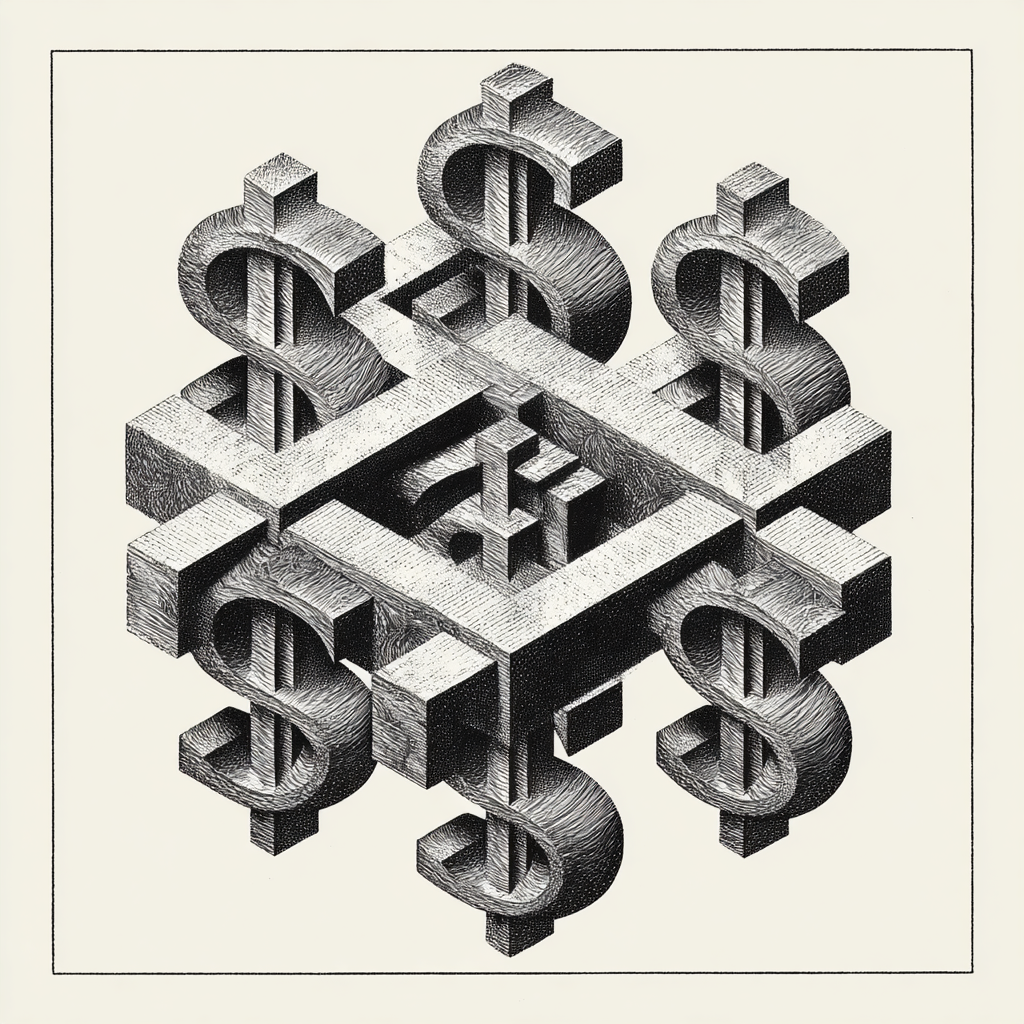
The Hidden Costs of Insurance-Based Pediatrics
Systems reveal their philosophy through their design. Concealment prioritizes control. Transparency prioritizes trust.
When valuables are hidden in furniture, we assume danger outside the drawer. Secrecy here is defensive architecture.
When costs, however, are hidden in healthcare, patients begin to assume danger inside the system.
Insurance-based pediatrics, however, often functions with a similar architecture of concealment, though not always intentionally malicious.
Pricing is obscured behind negotiated contracts. Reimbursement depends on coding layers most families never see. The true cost of a visit may not be known until weeks later. The incentives that shape care are buried in actuarial models and risk pools. Like a false panel in a desk, the visible surface is clean and reassuring, but the structural reality sits behind it.
We take the opposite architectural stance. Our prices are stated plainly. The monthly subscription is not hidden behind claims processing. As a result, the relationship with patients is always direct, not mediated through third-party reimbursement hurdles.
When incentives are visible, trust has fewer shadows in which to hide.
Now, the analogy must be handled carefully. Hidden compartments in furniture are meant to protect. Insurance opacity emerged historically as a mechanism for pooling risk and managing large populations.
We get it.
It was not born as deception; it evolved from complexity. But complexity, when layered long enough, begins to resemble concealment. Patients experience it not as protection but as obscurity.
Philosophically, this is a question about architecture. What does a healthcare system choose to reveal, and what does it bury?
In insurance-based models, information asymmetry is structural. The parent often does not know the real cost, the negotiated rate, or the administrative pathway shaping decisions. In DPC, the structure is intentionally exposed. Fewer intermediaries mean fewer hidden chambers.
Rising Star Pediatrics is less like a desk with secret drawers and more like a glass cabinet. What you see is what you are paying for.
We don’t do false bottoms.